Why Website Readability Beats Visual Complexity Every Time
31 March 2026 by Mike Rose
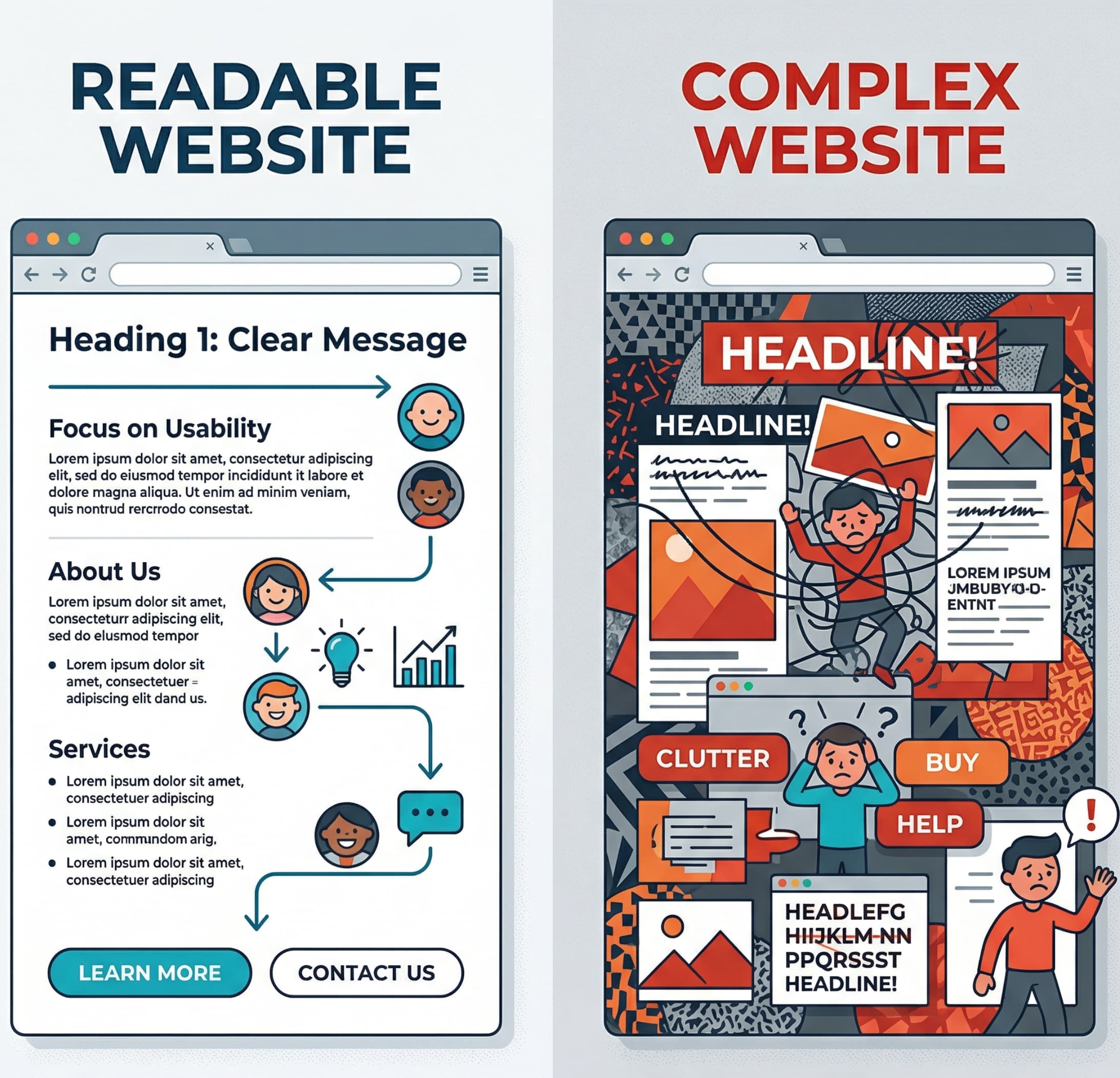
There is a particular kind of website that looks expensive at first glance. It glides into view with cinematic animations, layered visuals, floating text, and a layout so stylised it seems determined to prove how modern it is. It may even win admiration in a design showcase. But there is a problem – many of these websites are quietly terrible at communicating.
In the pursuit of looking premium, too many businesses lose sight of what a website is actually there to do. A website is not simply a digital mood board. It is a tool for communication, trust-building, and conversion. If a visitor cannot quickly understand what you offer, who it is for, and what they should do next, then no amount of visual flair will rescue the experience.
This is where readability becomes commercially significant. Not glamorous. Not especially trendy. But powerful. Readability is often the difference between a website that gets admired and a website that gets results. And in most cases, results matter more.
What Website Readability Really Means
When people hear the word readability, they often reduce it to font size. That is part of the picture, but only a small part. Website readability is really about how effortlessly users can absorb information, move through a page, and stay oriented without friction.
It is shaped by multiple design decisions working together. Typography matters, certainly, but so do line spacing, paragraph length, contrast, hierarchy, white space, and the relationship between text and surrounding visual elements. It is not just about whether words can technically be read – it is about whether they can be processed comfortably and quickly.
This makes readability both a design issue and a messaging issue. A beautifully spaced page filled with vague, overcomplicated copy is still hard to read in a meaningful sense. Likewise, even strong copy can be undermined by poor layout choices that make the content feel dense or chaotic.
A readable website does not merely present information. It guides the eye, reduces effort, and allows meaning to land with clarity.
Why Readability Shapes User Behaviour
Most people do not read websites in the way they read books or newspapers. They scan. They skim. They make rapid judgements based on fragments of information and visual cues, assembling an impression in seconds. That impression matters more than many businesses realise.
If a page feels easy to navigate and easy to understand, users are more likely to stay, explore, and engage. If it feels mentally taxing, even in subtle ways, they are more likely to drift away. This is not always a conscious rejection. Often, it is just friction. A page that asks too much effort of its visitor creates hesitation, and hesitation is one of the quietest killers of conversion.
Readability directly influences trust as well. Clean structure and clear communication create a sense of competence. They signal that the business behind the site understands not just design, but the user’s time and attention. That matters. When people are evaluating whether to enquire, buy, or book, they are not only judging your offer. They are judging how easy you are to understand.
A readable website says, without needing to say it outright, that this brand has its act together.
The Hidden Cost of Visual Complexity
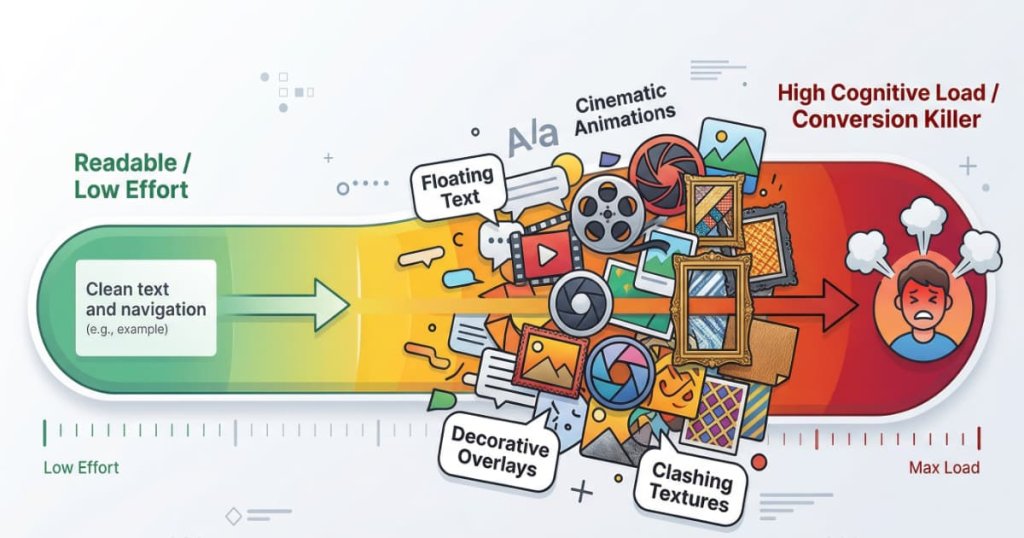
Visual complexity often arrives disguised as sophistication. More layers, more movement, more styling, more “wow factor”. The assumption is that complexity creates distinction, that it elevates a brand above plainer competitors. In reality, complexity often dilutes the very thing it is meant to enhance.
The human brain is constantly filtering information. When a webpage presents too many competing elements at once, the result is cognitive overload. Headlines lose impact. Calls to action become less obvious. Supporting copy gets buried under decorative noise. Instead of feeling immersive, the page feels demanding.
This is particularly damaging on websites where clarity should be non-negotiable – service pages, landing pages, homepages, and contact pages. If the visual treatment distracts from the message, then design has started competing with communication rather than supporting it.
That does not mean every visually rich site is flawed. Some complex designs are executed with discipline and strategic precision. But too often, visual ambition outpaces usability. The site becomes more concerned with being admired than understood.
And admiration, on its own, rarely converts.
Why Simplicity Often Signals Confidence
There is a persistent fear among some brands that if a website is too clean, too spacious, or too straightforward, it will appear basic. This is usually a misunderstanding of what simplicity actually is.
Simplicity is not the absence of sophistication. It is the disciplined removal of what does not need to be there.
A well-designed, highly readable website often feels more premium than a cluttered one because it reflects confidence. It does not need to hide behind decorative excess or stylistic overcompensation. It allows the message, the offer, and the brand itself to breathe.
This kind of clarity creates calm. It makes the user feel guided rather than managed. It also makes the site feel more trustworthy, because there is less suspicion that important details are being obscured beneath design theatrics.
In digital marketing, confidence is often communicated through restraint. The brands that know what matters are usually the ones that do not try to say everything at once.
Designing for Readability Without Losing Brand Personality
Prioritising readability does not mean stripping a website of all character. In fact, the strongest websites often combine sharp readability with a distinctive visual identity. The key is ensuring that brand expression enhances usability rather than undermines it.
Typography can still have personality. Imagery can still feel rich and emotive. Colour palettes can still be bold. Layouts can still feel contemporary and polished. But all of these choices need to work in service of communication. They should reinforce the message, not compete with it.
This is where strategic website design becomes essential. Readability is not achieved by accident, nor is it simply a matter of “keeping things simple”. It requires considered decisions about hierarchy, pacing, contrast, and how users actually behave on screen. The best websites understand that design and content are not separate disciplines. They are collaborators.
When readability and brand identity work together, the result is powerful. You do not just get a website that looks good. You get one that feels clear, memorable, and commercially effective.
That is a far more valuable combination.
Clarity Converts Better Than Decoration
There will always be a temptation to make websites more elaborate than they need to be. More movement, more layers, more visual cleverness. But if those additions come at the expense of clarity, they are not improvements. They are obstacles.
Website readability is not a minor UX detail. It is one of the most commercially important aspects of design. It affects how people perceive your brand, how easily they understand your offer, and whether they stay long enough to take meaningful action.
A website should impress, certainly – but through precision, not clutter. Through clarity, not confusion. Through confidence, not complexity.
If your current site looks polished but still struggles to communicate, engage, or convert, Social Loop’s website design services can help. We create strategically designed websites that balance strong branding with exceptional readability, ensuring your business not only looks credible online, but performs like it should.