How to Use AI to Improve Your UX
15 June 2026 by Mike Rose
Artificial intelligence has quickly moved past the initial phase of speculative hype, evolving into a highly practical asset for modern digital design. It is no longer a futuristic concept. For many years, optimising a user interface relied on a mix of creative intuition and retrospective analytics, which frequently meant fixing design errors only after they had already frustrated your target audience. Today, machine learning models allow us to work proactively, stripping the guesswork out of complex layout choices by grounding decisions in predictive behavioural data. When integrated correctly, these systems do not replace human designers, but rather enhance their core capabilities, allowing teams to handle data at scale while keeping the final interface firmly focused on human needs.
The Eradication of Layout Friction
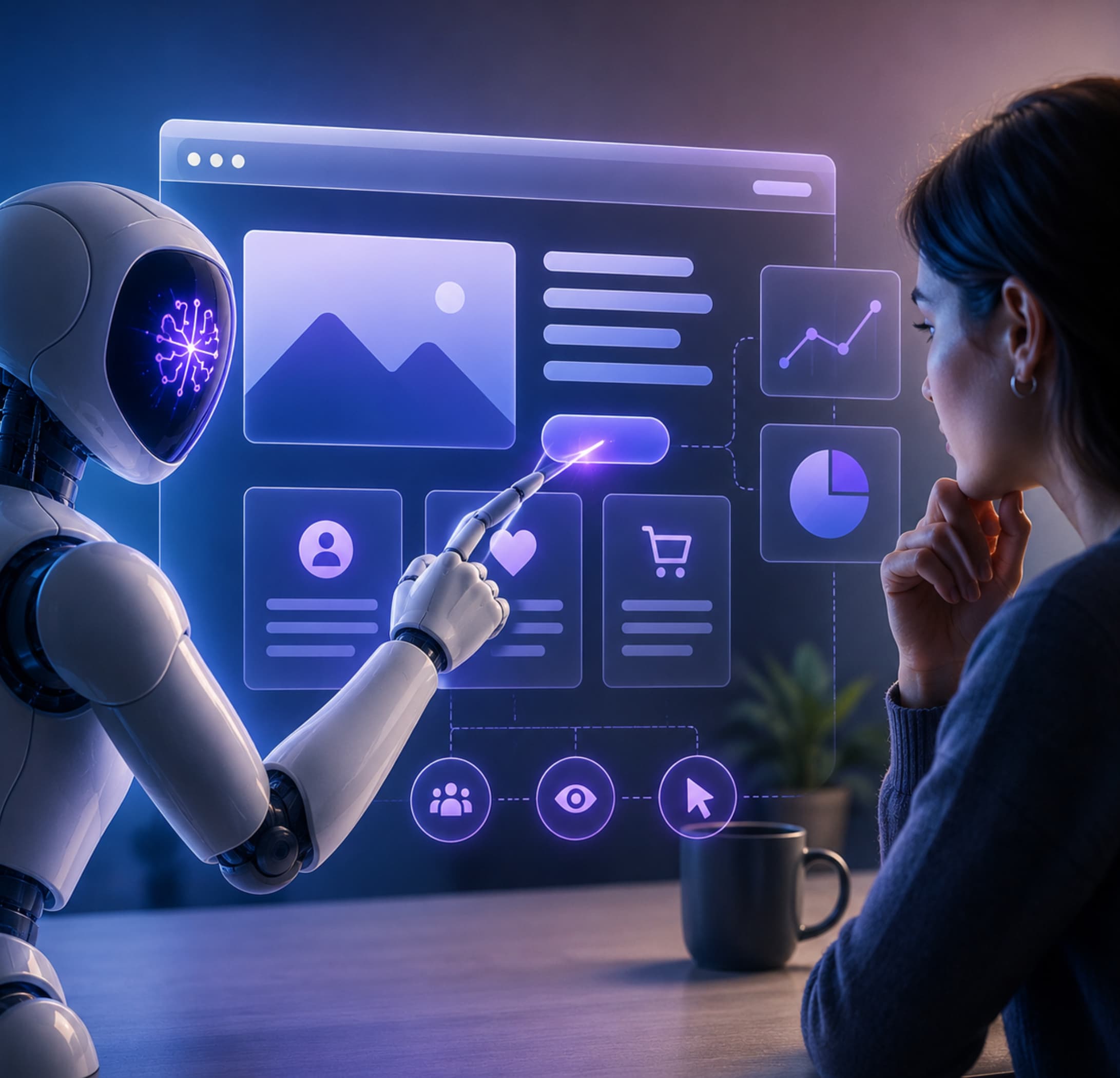
The primary objective of any user experience strategy is the reduction of cognitive friction, yet discovering exactly where a reader experiences a roadblock traditionally required expensive, manual testing periods. This process often delayed project timelines for months. AI changes this reality completely. Modern predictive algorithms can simulate thousands of user browsing paths within seconds, generating accurate attention heatmaps before a developer writes a single line of code.
This structural information allows designers to immediately see which elements are causing visual distraction and which are guiding the user smoothly, ensuring that the principles of user experience in digital marketing are established from day one. By resolving these structural issues early, you protect your conversion rates from the silent drop-offs that plague traditional web builds.
Predictive Personalisation and Intent Alignment
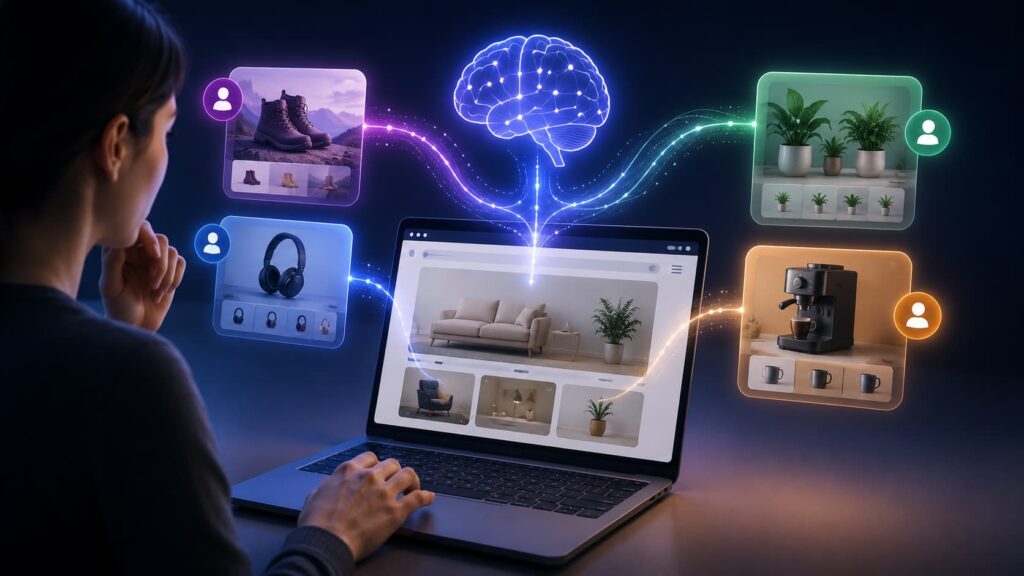
Static web design is increasingly ill-suited to the varied demands of modern web users, who expect immediate relevance from the moment they click a search result. Through machine learning, digital interfaces can now adapt to individual behaviour in real time, subtly adjusting content hierarchy, visual priority, and call-to-action placement based on immediate browsing signals. If a visitor arrives with clear transactional intent, the page can dynamically highlight direct commercial paths to streamline their purchase. Conversely, an informational browser is gently guided toward deep educational resources instead.
Weaving these automated micro-adjustments into a comprehensive website design ensures that your platform remains commercially sharp without alienating users who are merely browsing. The system handles the complex, structural heavy lifting, leaving the user with a fluid, entirely natural journey.
Visual Discipline and Cognitive Clarity
There is a persistent misconception in digital media that a more complex aesthetic somehow translates to higher perceived value. The opposite is almost always true. Visual complexity often dilutes a brand’s core message, as cluttered screens overwhelm the consumer’s processing capacity and trigger a swift, instinctive exit. AI helps to enforce a healthy sense of digital discipline. Readability models can objectively evaluate an interface, proving whether white space is being used efficiently and verifying that your core headings are not buried beneath unnecessary decorative noise.
This objective validation is vital because website readability beats visual complexity across every testing index, particularly on mobile screens where user patience is notoriously limited. Furthermore, these intelligent systems excel at auditing on-screen microcopy, refining navigation labels and form instructions to guarantee they are entirely free of alienating corporate jargon. Clear, accessible communication will always outperform superficial styling.
The Human Element in an Algorithmic Space
However, relying entirely on algorithmic data introduces its own set of distinct operational risks, as cold statistics can easily obscure the genuine human motivations behind user choices. An algorithm can easily show you exactly where a user chooses to drop off, but it requires human empathy to diagnose the emotional frustration causing that exit. The future of user experience does not lie in total automation, but rather in a balanced, collaborative partnership between predictive machine intelligence and human creativity. You use data to build a sturdy, friction-free foundation, but you use human storytelling to craft the message that truly resonates.
Ultimately, employing automated systems to improve your UX is a long-term strategy for commercial growth, demanding a constant commitment to objective testing and refinement. By letting algorithms manage the heavy analytical workloads, your creative teams are liberated to focus on what they do best – building authentic relationships with your audience. Technology works best when it makes an experience feel entirely human.