
How to Run Effective Retargeting Campaigns Without Annoying Users
28 November 2025 by admin
We all know the feeling of being followed around the internet by an ad that will not take a hint. It’s tedious for users and expensive for advertisers, because every unwanted impression burns attention and budget. Retargeting works when it behaves like a good salesperson – timely, relevant, brief, and silent once the job is done. The question isn’t whether to retarget, but how to do it in a way that earns another look rather than an eye-roll.
Why retargeting annoys people
Annoyance usually comes from a handful of avoidable sins. Over-long audience windows keep your ads alive for weeks after interest has faded. Lack of frequency capping lets the same creative chase someone across sites until banner blindness sets in. Static messages ignore context, serving a generic discount to a person who simply wanted delivery information. Worst of all, weak exclusions keep advertising to customers who have already bought, creating the sense of surveillance without the benefit of service. Add cross-device duplication and overlapping channels, and the total exposure quickly becomes noise.
Define “effective without annoying”
If the aim is performance, the bar is clear. A respectful retargeting programme should deliver higher assisted and last-click conversions at lower average frequency, protect brand search and direct traffic, and reduce the time to purchase among genuinely interested users. It should do this with fewer impressions, not more. The levers are simple, but they demand discipline: shorter audience windows, firm caps, coherent sequencing, and aggressive suppression when the goal is achieved.
Set short, intent-based audiences
Start by tightening who you speak to and for how long. Build segments around recent, meaningful actions – product views, basket adds, quote starts, content depth – and let timeframe do the heavy lifting. Hours and days beat months, because recency correlates with relevance. A basket abandoner from the last 48 hours merits a quick, useful nudge; someone who glanced at a blog post last month does not need a fortnight of reminders. When fulfilment is in motion, apply burn windows so ads pause while orders ship and settle, then re-open with gentle cross-sell only if appropriate.
Sequence messages so they evolve
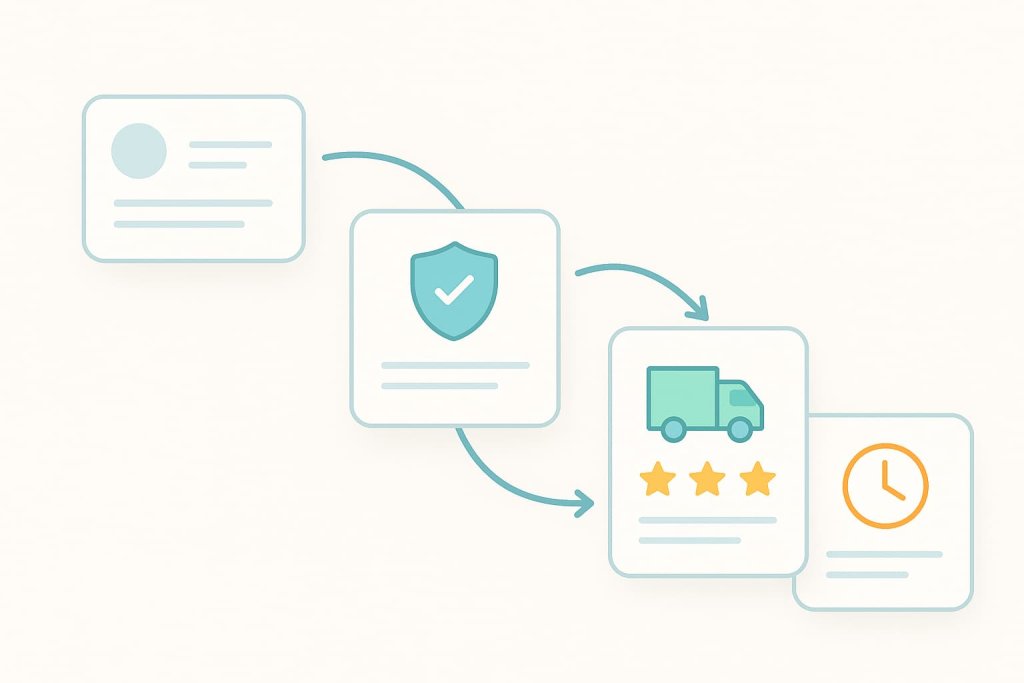
People move through a decision in stages, so your creative should too. The first touch is acknowledgement and orientation – you’re in the right place, here’s the path back, nothing tricky. Follow with reassurance or proof that removes typical doubts, using clear returns policies, delivery commitments, reviews and trust marks. Only when a genuine deadline exists should you add a time-bound nudge. Change the headline and imagery as the sequence progresses so it feels like guidance rather than pursuit. The copy should sound human and proportionate; a calm sentence about what happens next often outperforms louder, needier lines.
Match channel to the moment
Each channel has a temperament. Search remarketing can tune bids and tailor ad copy for cart abandoners who return via intent-led queries, giving you room to restate price, stock or collection options. Display and YouTube work as lightweight reminders that carry social proof and a single, obvious step back to the task. Paid social earns its keep with richer formats – a carousel of the exact items viewed, a short video that demonstrates the product in use – provided frequency is watched and placements are curated to avoid low-quality corners of the feed. Performance Max and dynamic remarketing can be powerful when fed clean feeds and guided by robust exclusions, but they still need guardrails so automation doesn’t overwhelm your audience.
Cap frequency like a grown-up
Frequency capping is not optional. Set hard limits per user per day, then monitor average frequency over a rolling seven-day period to catch channel overlap. When creative fatigue creeps in – CTR drops, CPC rises, impression-weighted frequency climbs – rotate assets or shorten windows before audiences switch off entirely. Remember that caps are guardrails, not goals; hitting the cap every day is a sign your windows or segments are too broad.
Honour privacy and consent
Respectful retargeting starts with permission. Use clear consent prompts, rely on first-party data where possible, and keep retention windows as short as your model allows. Server-side tagging can help preserve signal in a compliant way, but the north star remains the same: collect only what you need, explain why, and provide easy ways to opt out. Privacy-first habits aren’t paperwork – they are brand assets that make people more comfortable engaging with you again.
Measure incrementality, not just attribution
A retargeting campaign that looks efficient on paper can still be wasteful if it mostly harvests conversions that would have happened anyway. Build simple incrementality checks where you can – holdout audiences, geo splits, time-based pauses – and interpret view-through numbers with care. Track reach and average frequency alongside CTR and conversion rate, then watch second-order signals such as brand search volume, direct sessions and refund rates. If your numbers improve while complaints fall and opt-outs stay low, you’re on the right side of the line.
Fix the small words that close the gap
Creative craft often comes down to microcopy. A line beneath the button that sets expectations – delivery cut-offs, response times, trial terms – reduces hesitation more effectively than bigger discounts. If someone saved a basket, say you’ve saved it for them and for how long. If stock is limited, be specific rather than theatrical. If support is available, make the route plain with open hours and an approachable tone. Then send clicks to landing experiences that mirror the promise exactly, so no one feels baited into an unrelated page.
Bring it together with restraint
The best retargeting is felt as help – a timely reminder, a clear reassurance, an easy route back – not as surveillance. Set short, intent-led audiences and apply firm caps. Sequence the story so it evolves. Suppress quickly after conversion and during fulfilment. Choose channels that fit the moment, and keep your data practices clean and transparent. Measure the lift you add, not just the paper trail you collect. Do that, and you’ll spend less to earn more, while treating your audience with the respect that makes them far more likely to return.
Work with Social Loop
If you want retargeting that converts without crossing lines, Social Loop can help. Our PPC services design privacy-first, sequential remarketing with smart caps, clear exclusions and creative that reads like service – not pressure. Tell us your goals and your guardrails, and we’ll build a calm, effective programme that lifts revenue while keeping fatigue firmly in check.